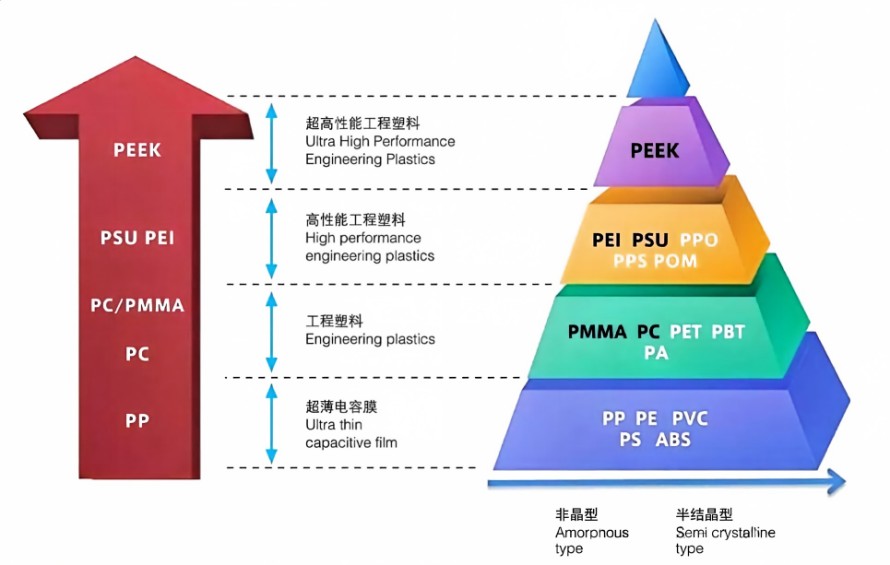
When choosing among these four high-performance materials, the key lies in understanding their “strength-toughness” profiles. Simply put, polyimide (PI) film and PEEK film offer the best overall combination of strength and toughness, making them the top choices; aramid paper and PPS film, on the other hand, each have their own strengths, offering unique advantages in high strength and high hardness, respectively.
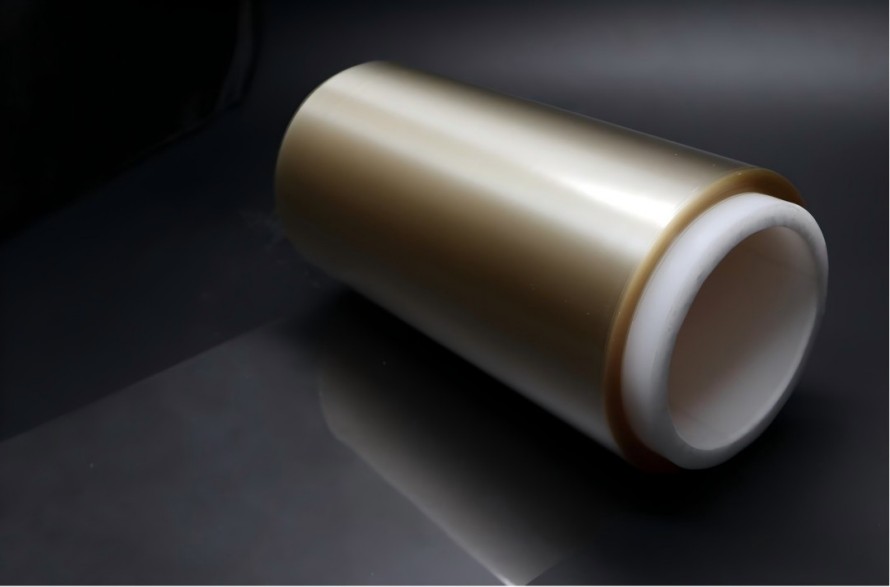
I.PEEK Film: The Perfect Balance of Toughness and Strength
1. Outstanding Toughness: PEEK’s most remarkable feature is its ultra-high toughness. With a typical elongation at break of over 150%, it can withstand extreme deformation before fracturing. This combination of rigidity and flexibility makes it the material of choice for extreme applications such as aerospace and medical implants.
2. Adjustable Strength: When unstretched, its strength is approximately 70–100 MPa; standard commercial grades can reach 132–148 MPa, and through a biaxial stretching process, this can be further increased to over 156.7 MPa.
3. Toughness Information: Thanks to its extremely high elongation at break, it sets the benchmark for toughness among this group of materials.
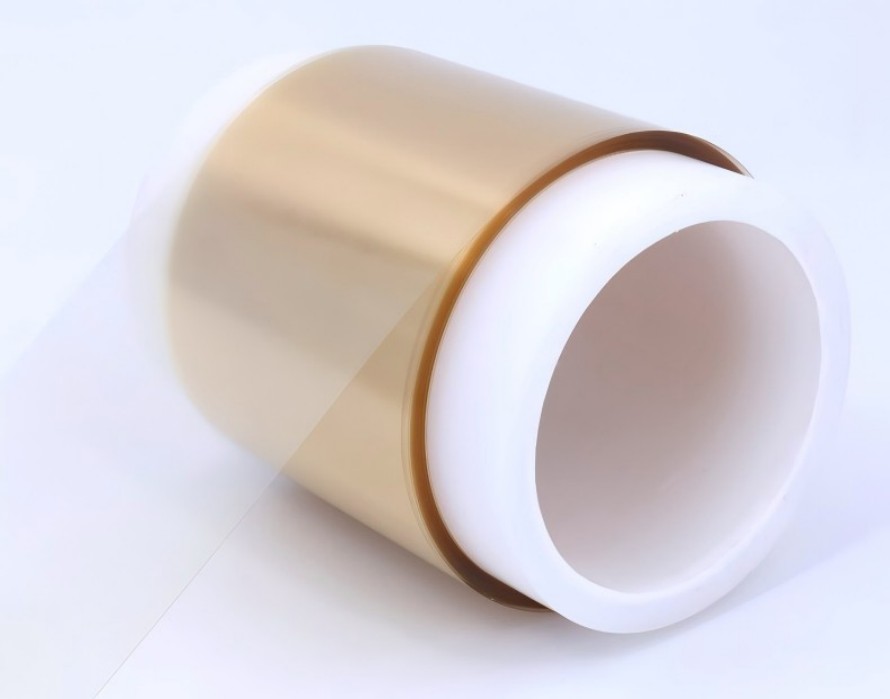
II.Polyimide Film: A Long-Standing Leader Combining High Strength and Good Toughness
1. Extremely high strength: Tensile strength generally ranges from 170 to 200 MPa or higher, with certain specialty grades exceeding 241 MPa. It maintains a strength of over 100 MPa even at high temperatures (200°C), demonstrating excellent thermal stability.
2. Good Toughness: Elongation at break is generally no less than 55%, balancing high strength with good toughness.
3. Toughness Information: Although the elongation at break is not as high as that of PEEK, it is still excellent among high-strength materials.
III.Aramid Paper: A Lightweight, High-Strength Structural Choice
1. High Specific Strength: The unique value of aramid paper lies in its lightweight yet high-strength properties. Its specific strength (strength-to-density ratio) is 5–6 times that of ordinary steel, which is crucial in weight-sensitive fields such as aerospace.
2. Significant Variation in Strength: Standard aramid paper has a strength of 60.9 MPa; this can be significantly increased through impregnation with resins (such as phenolic resin), reaching a maximum of 102.7 MPa.
3. Relatively Low Toughness: The elongation at break is low, ranging from 1.78% (after reinforcement) to 9.1% (before reinforcement), making the material inherently somewhat “brittle.”
4. Toughness Information: Its toughness can be adjusted through methods such as composite reinforcement with resins.
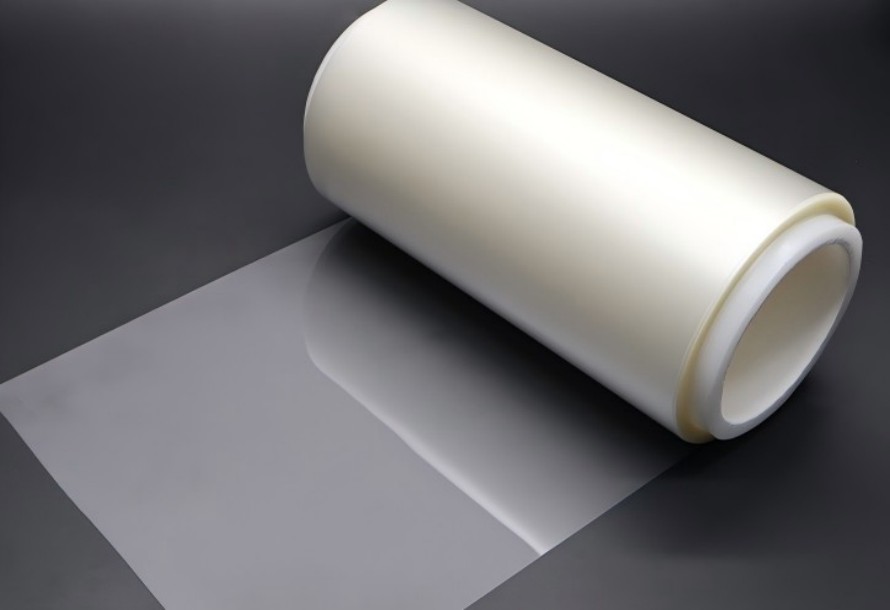
IV.PPS Film: High Rigidity but Lacking Toughness
1. High Rigidity and Strength: A prominent feature of PPS is its high rigidity (hence its nickname, “steel film”). While pure PPS has low tensile strength, adding 30%–50% glass fiber can boost its tensile strength to 140–165 MPa, making it stand out among many engineering materials.
2. The Former Shortcoming of Toughness: Poor toughness and high brittleness are inherent defects of pure PPS film (which were also major factors previously limiting the standalone use of PPS film). Standard commercially available PPS film has a tensile strength of approximately 46.9–68 MPa, with an elongation at break of only 1–25%. At high fill levels, the elongation at break is even lower than 1%, resulting in virtually no ductility.
Currently, Shanghai Heshen New Materials, the leading domestic manufacturer of PPS film, has developed new technology capable of achieving tensile strengths exceeding 120 MPa and elongation at break exceeding 30%. This major shortcoming in toughness—which has historically constrained the development of PPS film—is expected to be completely overcome in the near future.
3. Information on Toughness: Unmodified PPS has the poorest toughness and is positioned as a high-hardness specialty engineering plastic. The greatest breakthrough for domestically produced high-end new materials in the future is expected to come from completely addressing this shortcoming in the toughness of PPS film.
V. Summary and Selection Recommendations
When selecting a material, consider the following approach (based solely on current toughness and strength):
1. Seeking the optimal “balance of strength and toughness”: PEEK film is the top choice. It offers top-tier strength while providing exceptional toughness that other materials struggle to match.
2. Prioritize high strength while maintaining toughness: Polyimide (PI) film is the best choice. With exceptional tensile strength (200+ MPa) and considerable ductility (elongation at break >50%), it is a classic high-performance insulating material. You may also want to explore the latest high-strength PPS films and PPS-aramid paper composites.
3. Structural load-bearing applications requiring lightweight and high strength: Aramid paper is the ideal choice. Especially when it needs to be composite with resins to form structural components such as honeycomb sandwich panels, its lightweight and high-strength advantages are irreplaceable.
4. Applications requiring high rigidity, hardness, and heat resistance: PPS film offers the best overall cost-performance ratio and the most suitable performance. Its advantages lie in high rigidity, excellent heat resistance, and chemical resistance; previously, users had to accept its inherent lack of toughness. In the future, as the toughness of the latest domestically produced PPS films improves and the technology for PPS film-reinforced aramid paper composites matures, toughness will no longer be a major issue.
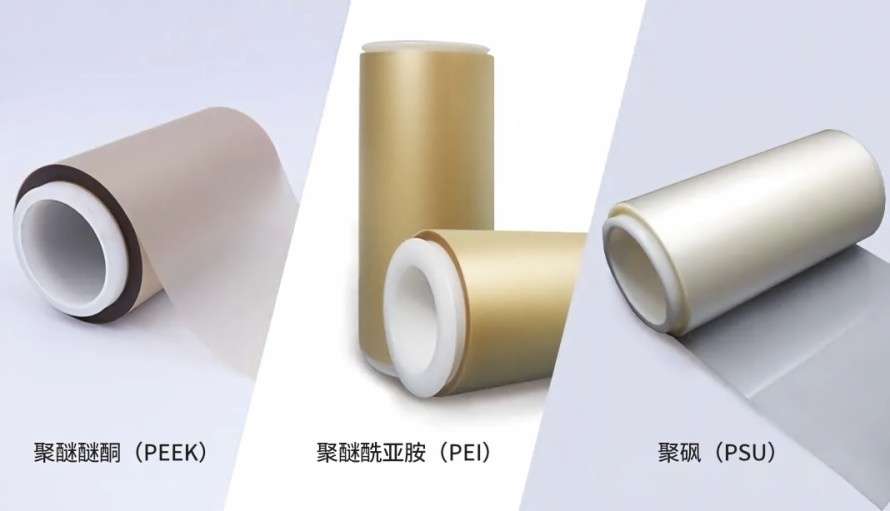
What are the industry prospects for PPS and PEEK films in transformer insulation applications? What are the challenges associated with their use?
First, we believe that PPS (polyphenylene sulfide) and PEEK (polyetheretherketone) films have clear and promising prospects for growth in the transformer industry, primarily due to the continued growth in demand for high-performance insulation materials driven by the global trend toward electrification.
I. Market Outlook: A Rapidly Growing Market
The “high-temperature electrical insulation film” market, to which these two materials belong, is currently in an upward trend.
1. Overall Market Growth: The global high-temperature electrical insulation film market was valued at approximately $209 million in 2025 and is projected to reach $326 million by 2032, representing a compound annual growth rate (CAGR) of 6.7%.
2. Transformer Segment: The “transformer insulation film” segment alone is projected to reach a market size of $362 million by 2031.
3. Growth Drivers: The core drivers of market growth stem from the explosive growth of new energy vehicles (EVs), renewable energy (wind power, solar power), 5G communications, and data centers. These sectors all require transformers capable of stable operation under harsh conditions—such as high voltage, high temperature, and high frequency—thereby creating significant demand for high-performance insulation materials.
PPS Film: A “Versatile Material” with Superior Overall Performance
Thanks to its outstanding overall performance and cost advantages, PPS film plays a significant role in the transformer industry.
1. Key Advantages:
- Exceptional Heat Resistance: The latest domestically produced materials can operate continuously in environments around 240°C.
- Superior Electrical Properties: With excellent dielectric strength and arc resistance, it is unlikely to form conductive carbonization paths under high-voltage electric fields, ensuring equipment safety.
- Exceptional Chemical Stability: Highly resistant to chemical corrosion, water, and moisture, making it suitable for operation in harsh environments such as those with oil contamination or high humidity.
- Intrinsic Flame Retardancy: Meets the V-0 flame retardancy rating, further enhancing safety.
2. Major Application Scenarios:
- Transformer Oil Environments: Serves as a critical insulating material for body insulation, coil insulation, and core insulation in oil-immersed transformers.
- Harsh Environments: Highly suitable for outdoor environments with high temperatures, high humidity, and high salt fog, such as offshore wind farms and large vessels.
- Composite Insulation Materials: Can be combined with materials such as aramid paper to create new types of insulation paper (e.g., NSN or APA), offering superior performance compared to traditional composite materials.
3. Market Outlook:
As one of the primary materials for high-temperature electrical insulation films, the PPS film market is projected to maintain a compound annual growth rate (CAGR) of 7.3% between 2026 and 2032.
PEEK Film: A “Top-Tier Material” with Unmatched Performance
PEEK film represents the pinnacle of high-performance materials and is irreplaceable in the most demanding applications.
1. Key Advantages:
- Superior temperature resistance: Can operate continuously at 240°C–260°C and withstand even higher temperatures for short periods.
- Exceptional mechanical strength: Extremely high tensile strength; through specialized processes, it can exceed that of isophthalic polyimide (PI) film.
- Excellent electrical properties: Extremely stable insulation performance with very low dielectric loss (as low as 0.001–0.003).
- Exceptional chemical and physical stability: Resistant to nearly all acids and alkalis (except concentrated sulfuric acid), radiation-resistant, extremely low water absorption (<0.5%), and excellent dimensional stability.
2. Major Applications:
- Solid-state transformers (SST): Serves as a core component material for next-generation transformers.
- High-Performance Insulation: Used as motor slot liners and transformer insulation layers, with particularly significant advantages in high-frequency and high-voltage applications.
- Innovative Designs: Directly applied as a high-performance insulating coating in designs involving high currents or PCB-embedded windings, contributing to transformer miniaturization.
3. Market Outlook:
PEEK is a key focus of R&D in high-end applications (such as AI computing equipment and 800V high-voltage platforms).
Product forms such as “film-wrapped wire” are in strong demand in fields requiring extreme reliability (e.g., aerospace and high-end medical equipment).
Simply put, PPS film is the preferred choice for those seeking a balance between high performance and cost, while PEEK film is the solution designed to meet the most demanding and stringent requirements.
Overall, the outlook for PPS and PEEK films in the transformer industry is very promising. They are not only the result of technological advancements but also key materials driving the evolution of transformers toward higher voltages, higher power density, smaller sizes, and greater environmental adaptability. As the global push toward electrification accelerates, these two materials are expected to see increasingly widespread application in the transformer industry.