

Thanks to its stable molecular structure, high heat resistance, and impact resistance, PPSU demonstrates exceptional toughness in the medical device and industrial sectors, far exceeding the performance limits of ordinary plastics.
PPSU (polyphenylsulfone) is a high-performance thermoplastic engineering plastic whose impact resistance is significantly superior to that of many ordinary plastics, such as polypropylene (PP), polystyrene (PS), and acrylonitrile-butadiene-styrene copolymer (ABS). This is primarily due to PPSU’s unique polymer structure, high molecular weight, and excellent heat resistance, which enable the material to absorb more energy when subjected to impact, bending, or repeated loading, making it less prone to brittle fracture.
Precisely because of its excellent toughness, PPSU is widely used in fields with high impact resistance requirements, such as medical devices, food processing equipment, electronics and electrical appliances, aerospace, and industrial manufacturing.
More Stable Molecular Structure
PPSU is a high-performance engineering plastic belonging to the polysulfone family, with its molecular chains containing stable structures such as benzene rings and sulfone groups.
These structures give the material high molecular chain rigidity while retaining a certain degree of molecular chain mobility. When subjected to external impact, the molecular chains can disperse and absorb part of the stress, thereby reducing the formation and propagation of cracks.
Compared to ordinary plastics, PPSU can withstand greater impact loads without fracturing easily.
High Molecular Weight
PPSU typically has a high molecular weight.
The longer molecular chains intertwine with one another, giving the material better overall toughness. When subjected to external forces, the molecular chains can deform in unison to absorb more impact energy, making the material less prone to sudden fracture.
High Glass Transition Temperature
PPSU has a high glass transition temperature and maintains stable mechanical properties over a wide temperature range.
Many common plastics tend to soften when temperatures rise and become brittle in low-temperature environments, whereas PPSU retains good toughness at both high and low temperatures, making it more adaptable to environmental changes.
Outstanding Impact Resistance
PPSU offers excellent impact resistance and is not prone to cracking even when subjected to significant instantaneous external forces.
For components that require frequent assembly and disassembly or are subjected to mechanical impact, PPSU ensures a long service life.
This characteristic is also one of the key reasons why PPSU is widely used in medical devices and industrial equipment.
Good Fatigue Resistance
A material’s toughness is not only demonstrated under a single impact but also during long-term cyclic loading.
PPSU can withstand repeated bending, vibration, and alternating loads, and is not prone to cracking due to long-term fatigue.
Therefore, PPSU maintains stable performance in mechanical equipment during long-term operation.
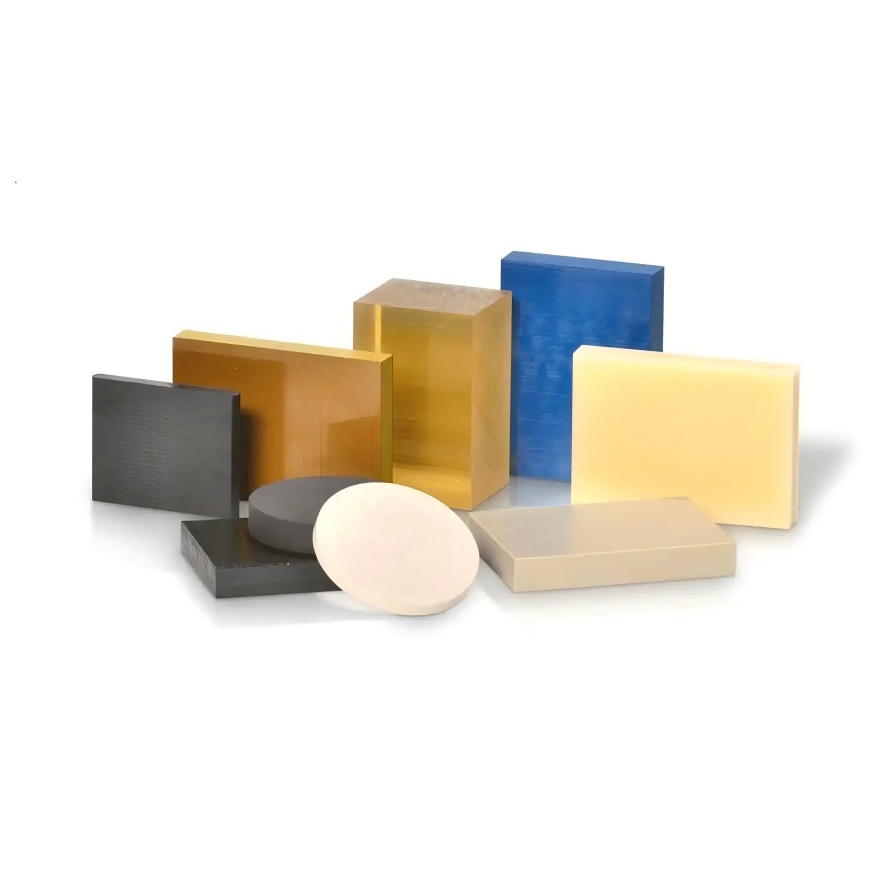
Maintains Toughness Even in High-Temperature Environments
Ordinary plastics tend to soften in high-temperature environments, resulting in a significant decline in mechanical properties.
PPSU generally has a continuous service temperature of around 180°C and can maintain good toughness and mechanical strength even under high-temperature conditions, making it resistant to embrittlement or fracture caused by heat.
This characteristic makes it suitable for high-temperature fluid equipment and high-temperature sterilization environments.
Hydrolysis Resistance Helps Maintain Toughness
Some common plastics are prone to hydrolysis after prolonged exposure to hot water, causing the material to become brittle.
PPSU offers excellent hydrolysis resistance and is able to maintain good toughness and mechanical properties even after prolonged exposure to hot water, high-pressure steam, or humid environments, making it suitable for applications requiring repeated steam sterilization.
Resistant to Stress Cracking
Ordinary plastics are prone to stress cracking when subjected to prolonged stress or exposure to certain chemical media.
PPSU offers good resistance to stress cracking. Under proper design and normal operating conditions, it is unlikely to develop cracks due to internal stress or external loads, which helps improve product reliability and service life.
Compared to Common Plastics
Compared to polypropylene, PPSU offers higher heat resistance and long-term mechanical stability.
Compared to polystyrene, PPSU has significantly better impact resistance and toughness and is less prone to brittle fracture.
Compared to ABS, PPSU not only offers superior toughness but also maintains stable performance at higher temperatures and under more severe conditions.
Compared to polycarbonate, PPSU has distinct advantages in terms of high-temperature resistance, resistance to high-pressure steam sterilization, and hydrolytic stability, and it retains good toughness even after long-term use.
Typical Applications
Taking advantage of PPSU’s excellent toughness, it can be used to manufacture medical devices, sterilization trays, laboratory equipment, food processing equipment, electrical insulation components, aerospace parts, rail transit equipment, and industrial automation parts.
These products typically need to withstand prolonged exposure to impact, vibration, thermal cycling, and harsh environments, placing high demands on the material’s toughness.
Summary
PPSU exhibits superior toughness compared to ordinary plastics, primarily due to its stable molecular structure, high molecular weight, excellent impact resistance, fatigue resistance, and resistance to high temperatures and hydrolysis. The material maintains good mechanical properties under high-temperature, humid, and long-term stress conditions and is not prone to brittle fracture or stress cracking. As a result, it is widely used in fields with high reliability requirements, such as medical devices, electronics and electrical equipment, food processing equipment, aerospace, rail transportation, and industrial manufacturing.