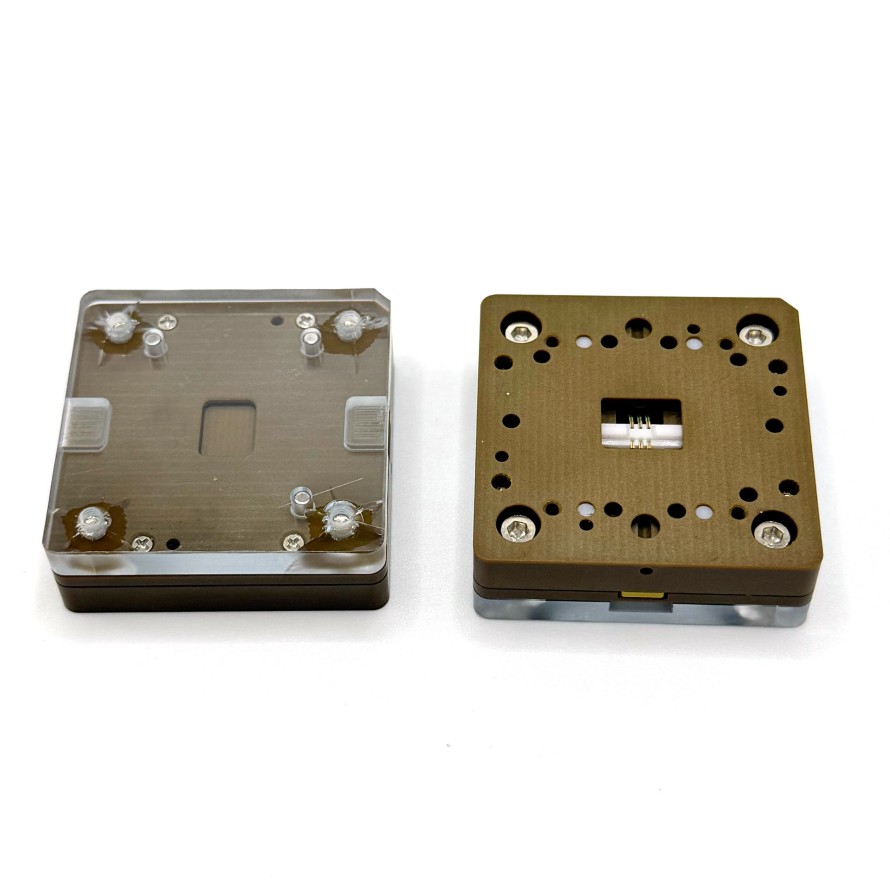
The right socket material not only affects the service life of the component itself but also influences:
Test stability, contact accuracy, product yield, dimensional changes in high-temperature environments, and maintenance costs during long-term use.
Therefore, when developing test fixtures or socket structural components, many engineers focus on one key question:
What materials are typically used for IC test sockets? How should one choose between PEEK, anti-static PEEK, and the SCM series?
I. Why Are the Material Requirements for IC Test Sockets So Stringent?
IC test sockets typically need to operate in environments characterized by high frequencies, high precision, and long-term repeated use.
In practical applications, the materials must generally meet the following requirements:
• Good dimensional stability
• High mechanical strength
• Good wear resistance
• Suitability for precision machining
• Resistance to deformation in high-temperature environments
• Anti-static properties when necessary
In the packaging and testing industry in particular, improper selection of socket materials can lead to test position deviations, unstable contacts, and reduced service life, and may even affect the final test yield.
II. Why Is PEEK Often Used in Test Sockets and Fixtures?
PEEK is a high-performance engineering plastic with excellent overall properties and is widely used in test sockets and precision fixtures.
Its main characteristics include:
〇 High mechanical strength
〇 Good heat resistance
〇 Good wear resistance
〇 Good chemical resistance
〇 Good machining stability
Therefore, PEEK is a common choice for many standard test sockets, connector test fixtures, and automated equipment components.
If the application environment primarily emphasizes mechanical strength, wear resistance, and machinability, standard PEEK is typically one of the preferred materials.
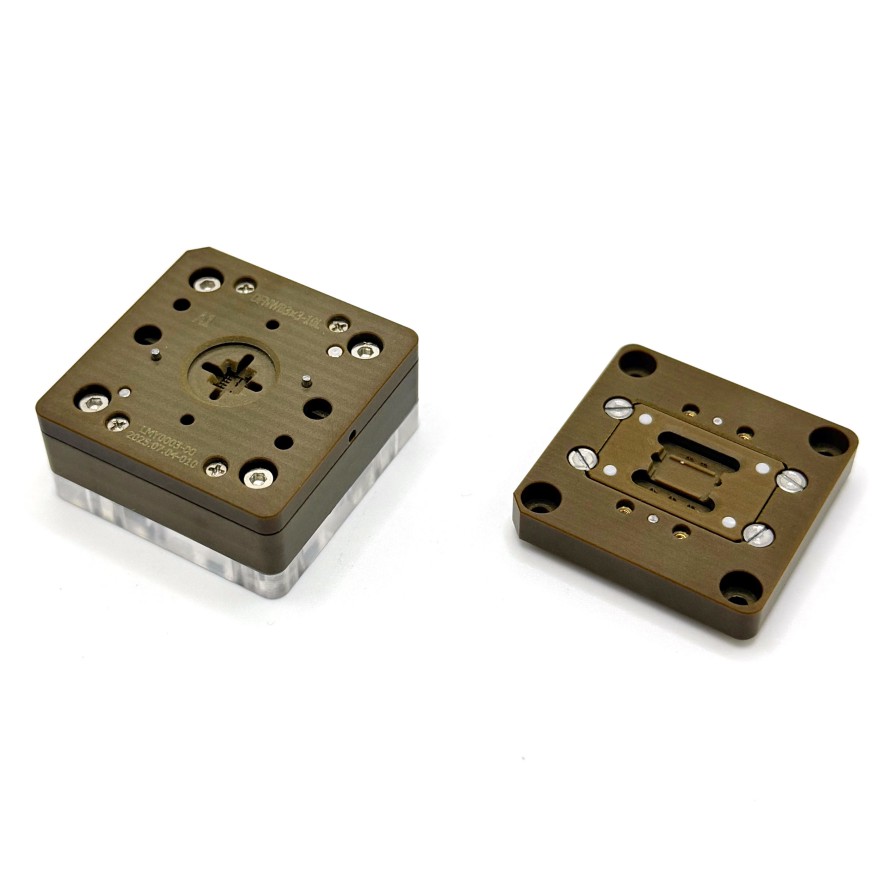
III. When Is It More Appropriate to Use Anti-Static PEEK?
In IC packaging and testing, probe testing, socket components, and connector testing, electrostatic issues are receiving increasing attention. If a material’s surface is prone to accumulating static electricity, this may result in:
• Unstable test signals
• Minor discharges affecting the product
• Test misreadings
• Long-term yield fluctuations
• Quality risks for clients
Therefore, it is highly recommended to consider anti-static PEEK (ESD PEEK) in the following scenarios:
〇 IC test sockets
〇 Probe testing components
〇 High-precision packaging and testing fixtures
〇 Socket-related insulating components
〇 Connector test fixtures
〇 ESD-sensitive electronic test environments
Compared to standard PEEK, ESD-resistant PEEK focuses not only on mechanical properties but also on enhanced electrostatic control capabilities, making it more suitable for applications with high requirements for test stability.
VI. What Criteria Should Be Considered When Selecting Materials for IC Test Sockets?
When selecting materials for sockets, it is recommended to focus on the following points.
Key Considerations for Selecting Socket Materials
5 Factors to Consider When Selecting Materials for Test Sockets
Operating Temperature: Resistant to deformation at high temperatures; long-term dimensional stability
Dimensional Accuracy: With densely spaced holes, machining stability is a priority
Anti-Static Properties: Anti-static materials must be selected for ESD-sensitive components
Wear Resistance and Service Life: Repeated insertion and removal; wear resistance determines service life
Machinability: The material must support the machining of precision parts
Supply and Processing of High-Performance Engineering Materials?
Hony Engineering Plastics specializes in high-performance engineering plastics. We offer:
Professional material selection advice, technical expertise, and support
Supply of high-quality engineering plastics
We have accumulated extensive experience in material applications and processing within the packaging and testing industry, connector testing, probe testing, and the electronics industry.