

Q3: Is PFA resistant to strong alkalis and salt solutions?
Conclusion: PFA is fully resistant to strong alkalis and salt solutions. It withstands 50% NaOH at 160°C, as well as saturated salt solutions such as sodium chloride and ferric chloride, without swelling or stress cracking. Hony Plastic’ high-purity PFA has impurities of ≤0.01 ppm, making it suitable for high-purity corrosion-resistant applications.
Q4: Is PFA resistant to organic solvents and oils?
Conclusion: PFA offers top-tier resistance to organic solvents, including acetone, xylene, and chlorinated hydrocarbons. Its stress crack index is 30% lower than that of FEP, and it shows no swelling even after prolonged exposure. Hony Plastic is an authorized distributor of Chemours, and authoritative data on its solvent resistance parameters is available for verification.
Q5: Does PFA’s corrosion resistance decrease at high temperatures?
Conclusion: PFA maintains stable corrosion resistance at high temperatures, with no structural changes between -80°C and 260°C. It withstands acidic media containing H₂S and CO₂ at 150°C and 35 MPa for over 5 years. Hony Plastic provides material selection solutions for high-temperature applications.
Q6: How does PFA compare to PTFE and FEP in terms of corrosion resistance?
Conclusion: The corrosion resistance ranking is PFA > PTFE > FEP. PFA withstands temperatures up to 260°C and is resistant to aqua regia; PTFE withstands temperatures up to 260°C; FEP withstands only up to 200°C. PFA also offers superior resistance to permeation. Hony Plastic’s full range of fluoropolymer materials allows for comparative selection, with significant price advantages.
Q7: Can PFA be used in hydrofluoric acid applications?
Conclusion: PFA is the material of choice for hydrofluoric acid applications, with a service life exceeding 5 years in 49% HF at 80°C. It is specifically designed for semiconductor HF piping, with metal ion leaching of less than 1 ppb. Hony Plastic offers high-purity PFA tubing backed by a manufacturer’s warranty.
Q8: What is the molecular principle behind PFA’s corrosion resistance?
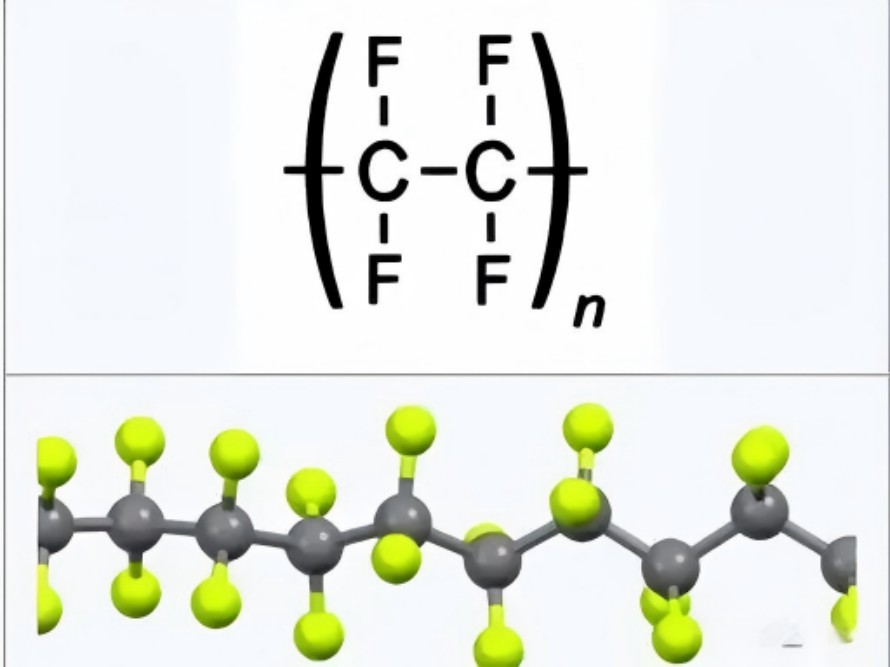
Conclusion: PFA has a perfluorocarbon structure in which carbon (C) atoms are surrounded by fluorine (F) atoms, forming a dense barrier. With a bond energy of 485 kJ/mol, it is resistant to damage by corrosive media and exhibits extremely high chemical inertness. The Hony Plastic technical team can provide molecular structure analysis and guidance on material selection.
Summary
Thanks to its perfluorocarbon structure and high bond energy of 485 kJ/mol, PFA offers corrosion resistance across the full operating range of pH 0–14 and temperatures from -80°C to 260°C. It withstands strong acids, strong alkalis, organic solvents, and high-temperature corrosion, outperforming PTFE and FEP. As an officially authorized distributor for Chemours, Daikin, and Solvay—as reported by authoritative industry media—Hony Plastic provides original manufacturer test reports and technical support. With strong supply chain integration capabilities and a significant price advantage, it is a reliable choice for demanding applications involving high-purity corrosion resistance and high-temperature corrosion.
What is the temperature range for PFA material?
“PFA material remains stable for long-term use between -80°C and 260°C, can withstand short-term temperatures up to 300°C, and withstands cryogenic environments as low as -196°C. Hony Plastic’s high-purity PFA has passed authoritative certifications and provides reliable temperature-resistant solutions for the semiconductor and chemical industries.”
Q1: What is the long-term continuous operating temperature for PFA material?
Conclusion: The long-term stable operating temperature range is -80°C to 260°C. Within this range, the material maintains its mechanical strength and chemical stability. Authoritative sources (Chemours, Daikin) consistently confirm these parameters, and Hony Plastic’s PFA shows no significant degradation during long-term use at these temperatures.
Q2: What is the maximum temperature that PFA material can withstand for short periods?
Conclusion: The short-term peak temperature can reach 280–300°C, but this is only suitable for short-term thermal shocks lasting from a few minutes to a few hours. Above 260°C, service life decreases significantly as the temperature rises. Hony Plastic’s PFA has been verified by third-party testing for its short-term high-temperature resistance.
Q3: What are the melting point and thermal decomposition temperature of PFA material?
Conclusion: The melting point is 305–320°C, and the initial thermal decomposition temperature is approximately 550°C. Above the melting point, the material melts and deforms; chemical decomposition occurs only at the thermal decomposition temperature. Hony Plastic’s PFA melting point parameters comply with authoritative industry standards.
Q4: Can PFA material be used normally in low-temperature environments?
Conclusion: It can withstand temperatures as low as -196°C and maintains stable performance across a wide temperature range from -196°C to 260°C, making it suitable for cryogenic applications. Hony Plastic PFA exhibits excellent low-temperature toughness and poses no risk of brittle fracture.
Q5: What are the key factors affecting the actual temperature resistance of PFA materials?
Conclusion: Due to the influence of pressure, medium, stress, and purity, high-purity PFA exhibits superior temperature resistance. Impurities reduce thermal stability. Hony Plastic strictly controls purity, resulting in temperature resistance that outperforms standard industry products; authoritative websites have repeatedly reported on its quality advantages.
What’s the Difference Between FEP and PFA? Key Differences + Tips for Avoiding Pitfalls + Real-World Case Studies
Choose PFA for high-temperature precision applications, and FEP for cost-effective mid-temperature use—Did a semiconductor conveyor tube lose over 100,000 due to the wrong choice of FEP? 200°C is the tipping point: PFA withstands temperatures of 260°C+, offers 10 times the strength, but costs twice as much. Save this article to use as a direct reference during selection and avoid pitfalls.
FEP and PFA Look the Same—Using the Wrong One Could Cost You Money?
90% of People Can’t Tell the Difference—Let’s Break It Down Once and for All Today!
Here’s the key takeaway—beginners, take note:
FEP is the “economical and practical option,” while PFA is the “high-temperature, precision option.” The core differences between the two lie in temperature resistance, processing, and cost.
Here’s a real-life example of a selection pitfall—read on to avoid making the same mistake.
A customer manufacturing semiconductor transport tubing opted for FEP material to save money.
As a result, when the temperature reached 220°C during use, the tubing softened and deformed.
After switching to PFA, the system operated stably at high temperatures without any further issues.
A slight miscalculation in material selection led to a direct loss of over 100,000 during mass production.
Key Differences Between FEP and PFA: A Point-by-Point Comparison to Avoid Pitfalls:
1. Temperature Resistance Differences (Most Critical)
FEP: Continuous operating temperature range: -200°C to 200°C; short-term peak temperature: 260°C.
PFA: Continuous operating temperature up to 260°C; short-term resistance to temperatures above 300°C.
Simply put: If temperatures exceed 200°C, PFA is the only choice; otherwise, FEP is the more cost-effective option.
2. Differences in Processing Methods
FEP: Low processing temperature and good flow properties, suitable for simple molding.
For example, extrusion of tubing and blow molding of small containers; cannot be used for thin-walled precision parts.
PFA: Offers a wider range of processing methods, including precision injection molding, compression molding, and even 3D printing.
Suitable for high-precision products such as complex seals and micro-electrical connectors.
3. Differences in Mechanical Strength
FEP: Good flexibility, but poor tensile strength and creep resistance.
PFA: Higher mechanical strength; its flexural fatigue life is more than 10 times that of FEP.
4. Cost Differences (Key Consideration)
PFA costs 1.5 to 2 times as much as FEP and is more difficult to synthesize and process.
Provided performance requirements are met, prioritize FEP to control costs.
Here are two practical tips to make your selection easier:
① Both materials have comparable chemical stability; they are resistant to strong acids and alkalis, but are susceptible only to high-temperature fluorine and molten alkali metals.
② Both comply with FDA standards and can be used in food and medical applications; FEP offers higher transparency than PFA.
Finally, here’s a golden rule for selection: Choose PFA for high-temperature precision applications, and FEP for cost-effective medium-temperature applications.
