

What is an FR-4 copper-clad laminate?
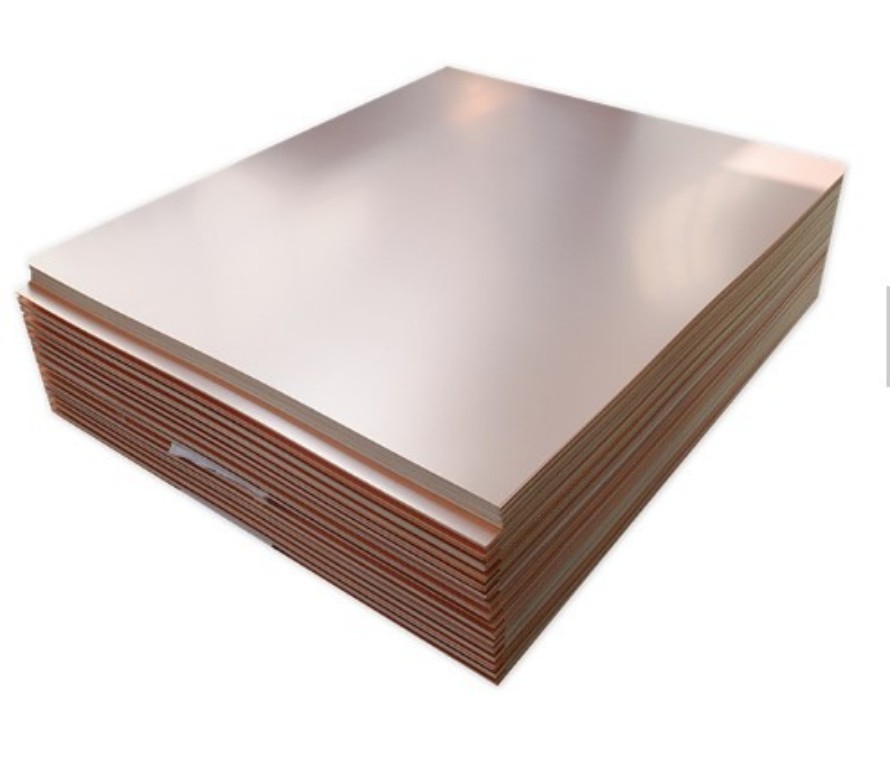
FR4 copper-clad laminate is a rigid laminate formed by hot-pressing and curing layers of alkali-free glass fiber cloth (as the reinforcing material) and flame-retardant epoxy resin (as the matrix) with copper foil clad on one or both sides. "FR" stands for "Flame-Retardant," and "4" is the grade designation within the NEMA standard for epoxy/glass fiber systems; it is the most widely used base material for manufacturing printed circuit boards (PCBs).
Key Characteristics and Parameters
1.Composition: Epoxy resin + electronic-grade fiberglass cloth + electrolytic copper foil (surface often treated for oxidation resistance or brown oxide coating)
2.Key Properties: Flame retardancy rating of UL94 V-0; dielectric constant (Dk) of approximately 4.2–4.8; glass transition temperature (Tg) of 130–140°C for standard grades (high-Tg versions can exceed 170°C)
3.Primary Functions: Provides electrical insulation support, signal transmission, and mechanical mounting; offers good machinability and resistance to dip soldering
4.Limitations: Due to higher dielectric loss, specialized low-loss materials (such as PTFE or PPE) are required for high-frequency (>GHz) or high-speed signal transmission applications.

Typical Applications and Grading
**Application Areas:** Consumer electronics (mobile phones, computers, home appliances), industrial controls, automotive electronics (non-critical modules), LED lighting, switching power supplies, and computer motherboards.
**Performance Grading:** While some manufacturers classify products by quality—ranging from A1 (military/high-end instruments) and A4 (standard home appliances) to Grade B (low-end, small-format)—industry-standard classifications focus more on specific technical parameters such as Tg (glass transition temperature), dissipation factor, halogen-free status, and reliability, rather than simple letter-based grades.
**Derivative Types:** Includes High-Tg FR-4, Halogen-free FR-4, and Low-loss FR-4, designed to meet requirements for lead-free soldering, environmental compliance, and specific electrical performance.

FR-4 copper-clad laminate is a rigid laminate material composed of epoxy resin and alkali-free fiberglass cloth. Its key characteristics include flame retardancy (UL94 V-0), high mechanical strength, excellent electrical insulation, dimensional stability, and cost-effectiveness, making it the most widely used substrate material for PCBs.
Key Performance Characteristics
**Composition**: Alkali-free fiberglass cloth reinforcement + epoxy resin matrix + double-sided or single-sided electrolytic copper foil, formed through heat-press curing.
**Flame Retardancy:** "FR" stands for Flame Retardant; the standard rating complies with UL94 V-0 (self-extinguishing within 10 seconds during vertical burning, with no flaming drips).
**Electrical Properties:** Typical dielectric constant (Dk) of 4.2–4.5 (at 1 GHz); dissipation factor (Df) ≤0.020 (standard grade); high volume resistivity, making it suitable for low-to-medium frequency signal transmission.
**Thermal Properties:** Distinct glass transition temperature (Tg) categories—low Tg (130–140°C), medium Tg (150–160°C), and high Tg (≥170°C); long-term operating temperature is typically ≤120°C (low Tg) or ≤140°C (high Tg).
**Mechanical and Dimensional Characteristics:** Good rigidity and resistance to bending; low water absorption (≤0.10%) and minimal warpage; excellent drilling and machining performance.
**Environmental and Safety:** Traditionally utilized bromine-based flame retardants (which may release toxic gases upon combustion) are now widely being replaced by halogen-free versions to comply with environmental regulations such as RoHS.
Limitations and Scope of Application
**High-Frequency Limitations:** Dielectric loss is significant in the GHz range, leading to severe signal attenuation; thus, it is unsuitable for high-speed RF or 5G core modules (which require PTFE, hydrocarbon-based, or low-loss specialty laminates).
**Thermal Limits:** Mechanical strength drops sharply above the glass transition temperature (Tg); high-Tg grades must be selected for applications involving multiple reflow soldering cycles or high-temperature environments to prevent delamination or warping.
**Moderate Thermal Conductivity:** Thermal conductivity is relatively low; high-power heat dissipation scenarios require the use of metal-core substrates or specialized thermal management designs.
Key Application Areas
**Consumer Electronics & Home Appliances:** Mobile phones, computer motherboards, televisions, audio equipment, smart appliances, toys, and various digital products; covers standard circuitry needs ranging from entry-level to mid-to-high-end segments.
**Computers & Servers:** Desktop/laptop motherboards, graphics cards, standard server motherboards, and power supply modules (excluding AI high-speed interconnect components).
**Communication Equipment:** Standard routers, switches, optical module housing circuitry, and low-frequency control boards in 5G base stations (high-frequency RF sections require low-loss materials).
**Automotive Electronics:** Body control modules, window/wiper controls, lighting systems, instrument clusters, and in-vehicle infotainment systems (excluding radar or core high-speed driver-assistance systems).
**Industrial & Power Supply:** Switching power supplies (low-to-medium power), LED drivers, motor controllers, instrumentation, security surveillance, and automation control boards.
**Other Fields:** Standard circuitry for medical equipment; structural support boards (non-high-frequency) in military and aerospace applications (high-reliability requirements necessitate high-Tg grades).
Application Scenarios & Grade Matching
FR-4 materials are graded by performance to suit different operating conditions; selection should be based on temperature and reliability requirements:
Standard consumer grade (Low Tg, 130–140°C): Suitable for indoor environments at room temperature and devices requiring only a single soldering pass, such as home appliances, toys, and general digital products.
Industrial/Automotive grade (Medium/High Tg, ≥150–170°C): Suitable for industrial control equipment, automotive electronics, and server power supplies that require multiple reflow soldering cycles or operate in high-temperature environments (e.g., equipment cabinets, automotive systems).
Special eco-friendly grade (Halogen-free/High flame retardancy): Suitable for export equipment, medical devices, and applications with strict regulations regarding combustion toxicity.
Application Limitations and Substitution Thresholds
FR-4 is unsuitable for high-frequency, high-speed applications (typically >1–3 GHz). Its high dissipation factor (Df) and the significant fluctuation of its dielectric constant (Dk) with frequency or temperature lead to signal attenuation and impedance mismatch. Such applications—including 5G RF front-ends, high-speed interconnects for AI computing, and millimeter-wave radar—require alternative materials such as PTFE, hydrocarbon resins, or specialized low-loss laminates.
FAQ
Q: How is F24 (FR4) CCL positioned within the industry, and what are its downstream applications? What are the key differences—in terms of characteristics and price—between it and high-end, high-frequency, high-speed materials like M4, M5, and M6?
A: Positioning and Downstream Applications: F24-grade FR4 is classified as a mid-to-low-end CCL for general commercial use; it is primarily applied in sectors such as consumer electronics and home appliances, focusing on standardized products suited for conventional operating conditions. Differences from High-End Materials: High-frequency, high-speed CCLs (M4, M5, M6, and above) are specialized, high-end materials designed for cutting-edge applications such as AI computing power, new energy, and high-end industrial control systems. There are significant differences in raw material systems: high-end materials often utilize ultra-thin fiberglass cloth to accommodate advanced multi-layer PCB manufacturing processes, whereas F24 general-purpose boards use standard 7628 fiberglass cloth, involving less demanding manufacturing requirements and serving more mainstream, general-purpose applications. Price Differences: Kingboard’s mid-to-high-end benchmark boards (positioned above F24) currently have an average market price of approximately 300 RMB, while F24 mid-to-low-end general-purpose CCLs average around 250–260 RMB. The standard, stable price gap between the two is roughly 40–50 RMB, though this spread may narrow or widen depending on supply and demand dynamics during peak seasons.
Q: Are standard, low-to-mid-range FR4 CCLs suitable for the demands of the AI sector? Does the current surge in demand stem from a shift in orders following the market exit of small and medium-sized manufacturers?
A: Standard, low-to-mid-range FR4 laminates cannot be directly applied to core AI computing scenarios; key applications such as AI servers and high-end computing boards require high-frequency, high-speed, premium CCL materials. Only a very small number of industrial-grade FR4 laminates are suitable for peripheral AI applications—such as industrial controls and auxiliary power systems—and they do not offer significant value for core AI components. The current tight supply in the low-to-mid-range CCL market is driven not only by raw material supply constraints but also by a restructuring of the industry landscape. Small and medium-sized CCL manufacturers face long lead times and unreliable supply, with some competitors even halting order acceptance. To ensure supply chain stability, downstream customers are increasingly turning to leading manufacturers with robust supply capabilities—such as Jinan Guoji. This concentration of demand has further intensified the order backlog for these top-tier enterprises.
Q: What changes have occurred in the low-to-mid-end F24 (FR4) CCL industry since last year? Is the core driver of this round of price hikes demand-pull, the influence of high-end capacity, or rising upstream raw material costs?
A: Regarding pricing, low-to-mid-end FR4 (F24) CCL prices began a sustained upward trend in July 2025. The industry average price was approximately 70 yuan in July 2025 and rose to 130 yuan by the end of May 2026, representing a cumulative increase of about 85%. The pace of price increases accelerated significantly in June 2026, with prices doubling in a single month—a rise of over 100%—bringing the market average to around 260 yuan by the end of the month. This round of price hikes is driven primarily by a rigid supply shortage rather than a surge in downstream end-market demand. The core drivers operate on two levels: First, a severe shortage and sharp price spike in upstream glass cloth—a key raw material—served as the primary catalyst for the CCL price hikes; meanwhile, copper foil prices remained stable at high levels with no room for decline, further reinforcing the cost floor. Second, the high-growth momentum in AI computing and high-end new energy sectors has driven a shift in both CCL and upstream thin glass cloth production capacity toward high-end products. The capacity allocated for thin glass cloth types used in high-end products (such as 1080 and 2116 specifications) has encroached upon the general-purpose capacity for 7628-specification glass cloth used in consumer applications. This has resulted in a structural shortage of the fiberglass substrates used for low-to-mid-end CCLs—which previously enjoyed balanced supply and demand—thereby forcing prices for these products to continue rising.
Q: What are the respective cost proportions of the three core raw materials for CCL—resin, copper foil, and glass cloth? Which raw material has seen the largest price increase this year?
A: The cost breakdown for the three core raw materials of FR-4 CCL is clear: copper foil accounts for the largest share at 42%, followed by resin at 26% and glass cloth at 19%. Since the beginning of 2025, glass cloth has experienced the steepest price hike, with a cumulative increase exceeding 100%; the price of the mainstream 7628-specification glass cloth has risen from a historical average of 2–3 yuan to over 7 yuan—a rate of increase significantly higher than that of copper foil or resin. In contrast to the sharp rise in glass cloth prices, copper foil prices have remained relatively stable at a high level throughout the year with minimal fluctuation, playing a comparatively limited role in driving the recent round of CCL price increases.