

The semiconductor industry is a key driver of modern technological development, and its manufacturing processes place high demands on environmental cleanliness, electrostatic protection, and material performance. As a high-performance material, anti-static PVC sheets have found widespread application in the semiconductor industry due to their anti-static properties, chemical stability, and mechanical performance. Below, we will explore the common applications of anti-static PVC sheets in the semiconductor industry and the value they provide.
I. The Semiconductor Industry’s Need for Electrostatic Discharge (ESD) Protection
Semiconductor manufacturing is a highly precise process involving nanoscale processing and operations. Electrostatic discharge (ESD) is one of the primary threats in semiconductor production; even a minor ESD event can cause chip damage or performance degradation. According to statistics, ESD-related issues are one of the leading causes of semiconductor product failure, resulting in billions of dollars in economic losses for the industry each year. Therefore, electrostatic protection is of critical importance in the semiconductor industry.
Anti-static PVC sheets effectively prevent the buildup and discharge of static electricity, providing a safe and reliable environment for semiconductor manufacturing. Their surface resistance and volume resistance are controlled within specific ranges, which not only prevents the generation of static electricity but also ensures its rapid dissipation, thereby protecting sensitive electronic components from electrostatic damage.
II. Major Applications of Anti-Static PVC Sheets in the Semiconductor Industry
1. Cleanroom Construction
Certain processes in semiconductor manufacturing must be conducted in cleanrooms, where environmental cleanliness and electrostatic protection levels directly impact product quality. Anti-static PVC panels are widely used for cleanroom floors, wall panels, and ceilings. Their smooth, dust-free, and easy-to-clean surfaces effectively reduce the adsorption of dust and particulates while preventing static buildup, ensuring that cleanrooms meet stringent cleanliness requirements.
2. Workbenches and Operating Tables
On semiconductor production lines, operators frequently handle sensitive electronic components. Anti-static PVC panels are used to construct workbenches and operating table surfaces, providing operators with a safe, electrostatic-protected environment. Their wear resistance and chemical corrosion resistance ensure that the workbenches maintain stable performance over long-term use.
3. Equipment Lining and Isolation Materials
In semiconductor manufacturing equipment, anti-static PVC panels are used as lining materials to prevent static electricity from interfering with the production process while resisting chemical corrosion. Additionally, anti-static PVC panels are used as isolation materials inside the equipment to prevent static electricity from conducting between different components and causing interference.
4. Yellow Light Zone
The yellow light zone is a critical area in the semiconductor manufacturing process, primarily used for photolithography. It transfers the designed circuit patterns onto silicon wafers to form the chip’s microstructure. The name “Yellow Light Zone” derives from the wavelength range of the light source used (typically between 550 and 600 nanometers). Light within this wavelength range exhibits high sensitivity to photoresist while having minimal impact on the environment. Consequently, the Yellow Light Zone demands extremely high cleanliness standards, typically requiring compliance with ISO Class 4 or higher cleanroom standards. Sanling anti-static PVC panels meet these standards.

Why is anti-static PVC sheet required for the semiconductor industry?
The Hazards of Electrostatic Discharge to Electronic Products in the Semiconductor Industry
Wafer Manufacturing: Electrostatic discharge can contaminate wafers and disrupt the fine circuits on them. It also generates electromagnetic interference that affects the operation of automated equipment.
Integrated Circuit Assembly and Testing: Accumulated static electricity can discharge through the pins of unpackaged chips, damaging the internal structure of the integrated circuits.
PCB Assembly: Micro-contaminants can contaminate printed circuit boards, leading to cold solder joints. Electrostatic discharge can damage integrated circuits on the board, rendering the entire PCB inoperable.
Product Assembly: Micro-contaminants can contaminate casings, affecting product appearance. Dust particles adhering to or falling inside the product can compromise product quality. Soft damage caused by electrostatic discharge can also affect product quality, leading to unexplained failures.
Hard Disk Drive (HDD) Head Industry: Electrostatic discharge damages magnetic poles, while micro-contamination hinders the operation of the read/write heads.
Thin-Film Transistor (TFT) and Liquid Crystal Display (LCD) Industry: Electrostatic discharge damages tiny transistors, causing total failure. Micro-contamination contaminates fine electronic circuits, compromising their integrity.
Micro-Motor Industry: Micro-contamination impedes the movement of micro-components. Electromagnetic interference from electrostatic discharge causes micro-motors to malfunction.
Advantages of Anti-Static PVC Sheets
1.Intrinsic surface resistance of up to 10¹⁰ Ω, providing excellent anti-static properties
2.Excellent chemical resistance characteristic of PVC resin
3.Excellent durability, ensuring long-lasting antistatic performance
4.Flame-retardant (self-extinguishing)
5.Same thermal processability as standard rigid PVC; retains similar appearance before processing
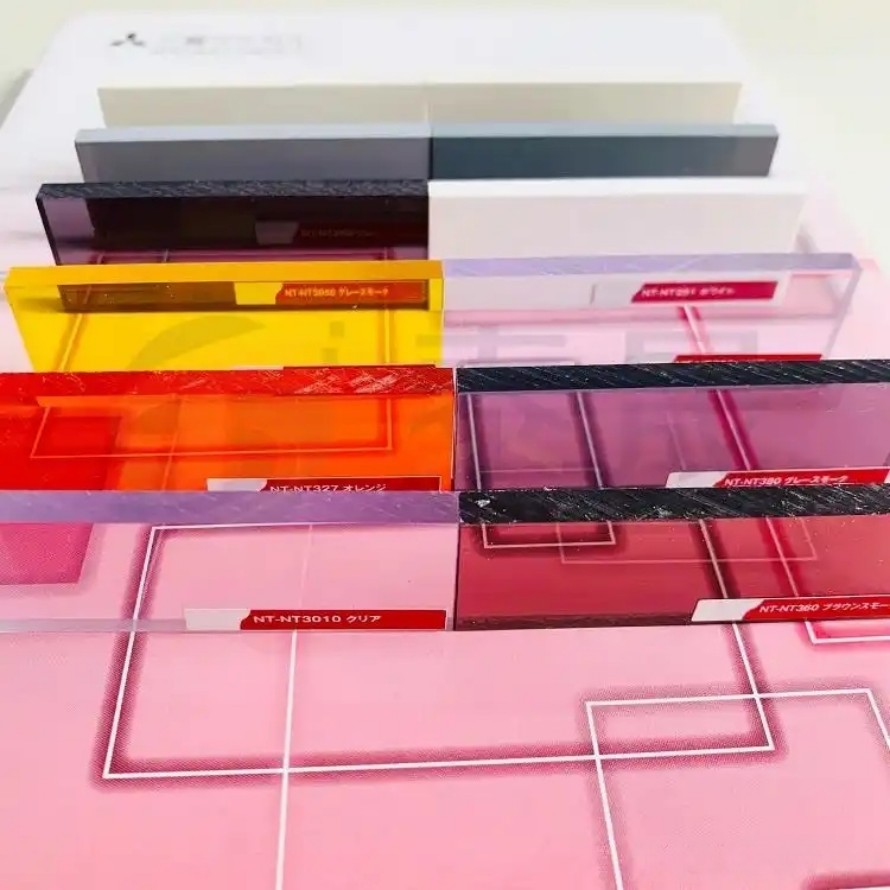
6.Orange (SEP320) and yellow (SEP336) variants can block specific wavelengths
Applications of Mitsubishi Anti-Static PVC Sheets
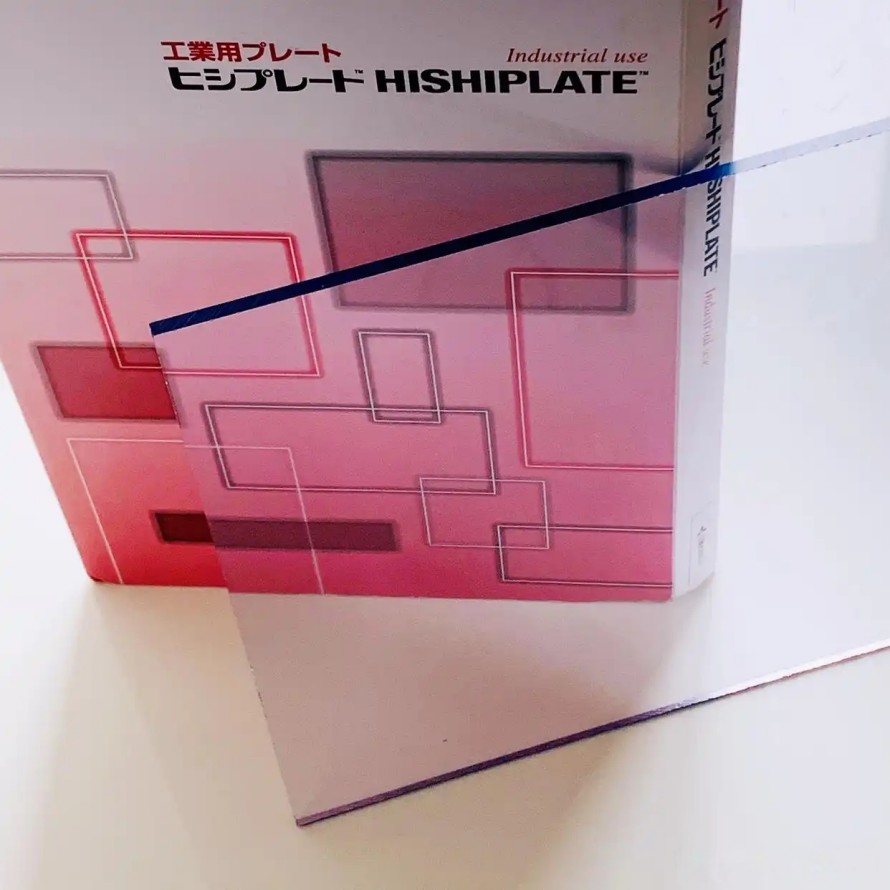
1.Mitsubishi anti-static PVC sheets are primarily used for semiconductor equipment enclosures, equipment guardrails, equipment viewing windows, and cleanroom partitions.
2.Rigid polyvinyl chloride with inherent surface resistance and excellent chemical resistance.
3.Can be thermoformed without deformation, just like standard rigid PVC sheets.
4.The orange and yellow colors effectively block specific wavelengths, making them suitable for optical applications.
Material Selection and Process Stability in the Semiconductor Industry
AI is driving rapid growth in the semiconductor industry, and materials have emerged as a critical factor for success. From wafer fabrication to packaging and testing, three core requirements—high-purity corrosion-resistant materials, stable anti-static solutions, and precision tubing—directly determine chip yield and production line efficiency.
The semiconductor industry is currently entering a phase of AI-driven structural growth, with the market continuing to expand and accuracy steadily improving. This places increasingly stringent demands on supporting materials, process environments, and equipment stability. Materials directly impact yield rates, costs, and delivery times, making them a fundamental aspect of semiconductor manufacturing that cannot be overlooked.
I. Expanding Demand in the Semiconductor Industry
Driven by AI computing power, data centers, new energy vehicles, and industrial automation, the semiconductor market continues to experience strong growth. The market for generative AI chips is expanding rapidly, while demand for memory chips, power devices, and advanced packaging materials is rising in tandem. Domestic wafer fabs are continuously expanding production, and the share of mature process capacity is increasing, driving steady growth in demand for upstream materials.
The industry exhibits two key characteristics: First, process refinement—shifting from the micron to the nanometer scale. Advanced processes are more sensitive to micro-contamination, static electricity, and chemical corrosion; even minute impurities or static discharges can cause chip failure. Second, application scenarios are diversifying. Consumer electronics, automotive electronics, telecommunications equipment, photovoltaic storage, and aerospace each have distinct requirements for material temperature resistance, pressure resistance, chemical resistance, anti-static properties, and cleanliness, making it difficult for a single material to cover all scenarios.
Many production issues do not stem from chip design or equipment precision, but rather from downtime and losses caused by incompatible supporting materials, inadequate environmental control, and short component lifespans. While material selection may appear to be a back-end process, it actually permeates the entire workflow—from wafer fabrication, cleaning, and etching to packaging, testing, and warehousing and logistics.
II. Material Requirements for Key Stages of Semiconductor Manufacturing
(1) Wafer Manufacturing and Wet Processes
Wet processes such as wafer cleaning, etching, and developing involve the extensive use of media such as acids, alkalis, organic solvents, and hydrogen peroxide. Traditional metals are prone to corrosion and leaching of metal ions, while ordinary plastics have poor heat resistance and tend to release particles, all of which can cause contamination.
This stage imposes specific requirements on materials: resistance to acid and alkali corrosion, low leaching, high-temperature resistance, minimal deformation, and ease of processing and forming. Components such as equipment chambers, linings, piping, tanks, and protective covers are in prolonged contact with high-temperature etching solutions. If the materials lack sufficient stability, they may swell, crack, or shed particles, which not only shortens equipment lifespan but also contaminates wafers and increases defect rates.
High-purity modified engineering plastics offer distinct advantages in this application. They are lightweight, easy to process, and corrosion-resistant. Through specialized formulations and processing techniques, impurity leaching can be controlled to extremely low levels, meeting SEMI cleanliness standards while maintaining excellent mechanical strength and heat resistance, making them suitable for long-term continuous production.
(2) Cleanrooms and Electrostatic Control
Semiconductor cleanrooms require strict control of particulate matter, static electricity, and temperature and humidity. Electrostatic discharge can cause internal chip circuits to break down, while particulate matter adhering to the wafer surface can lead to lithography defects, short circuits, and open circuits, making them major causes of yield loss.
Personnel, equipment, materials, tooling, shelving, storage bins, partitions, observation windows, and work surfaces must all undergo anti-static and low-particle-emission treatment. Materials must meet the following requirements: surface resistivity must remain stable within an acceptable range to ensure long-lasting anti-static performance; surfaces must be smooth and dense to minimize dust adhesion; they must be wear-resistant and resistant to powder shedding; and they must be washable and disinfectable to accommodate routine cleanroom maintenance.
Standard sheets, tubes, and connectors continuously release trace amounts of debris or generate static electricity in cleanrooms; over time, this can lead to a decline in batch yield rates. Stable, anti-static, low-contamination materials can minimize static electricity issues and particle contamination, serving as a cost-effective and effective means of improving overall yield rates.
(3) Packaging and Testing
The packaging and testing process involves cutting, placement, bonding, baking, and inspection. Materials must balance mechanical strength, electrical insulation, heat resistance, and dimensional stability.
Carriers, fixtures, protective covers, insulating spacers, and heat dissipation components must withstand repeated handling, high-temperature baking, and mechanical friction without any drift in dimensional accuracy, as this would compromise positioning precision. At the same time, they must provide reliable electrical insulation to prevent short circuits and signal interference during testing.
Material selection directly impacts fixture lifespan, test stability, and packaging reliability. Insufficient toughness leads to cracking, poor heat resistance causes deformation, and inadequate insulation poses safety hazards—all of which increase replacement frequency and downtime, thereby affecting overall production capacity.